

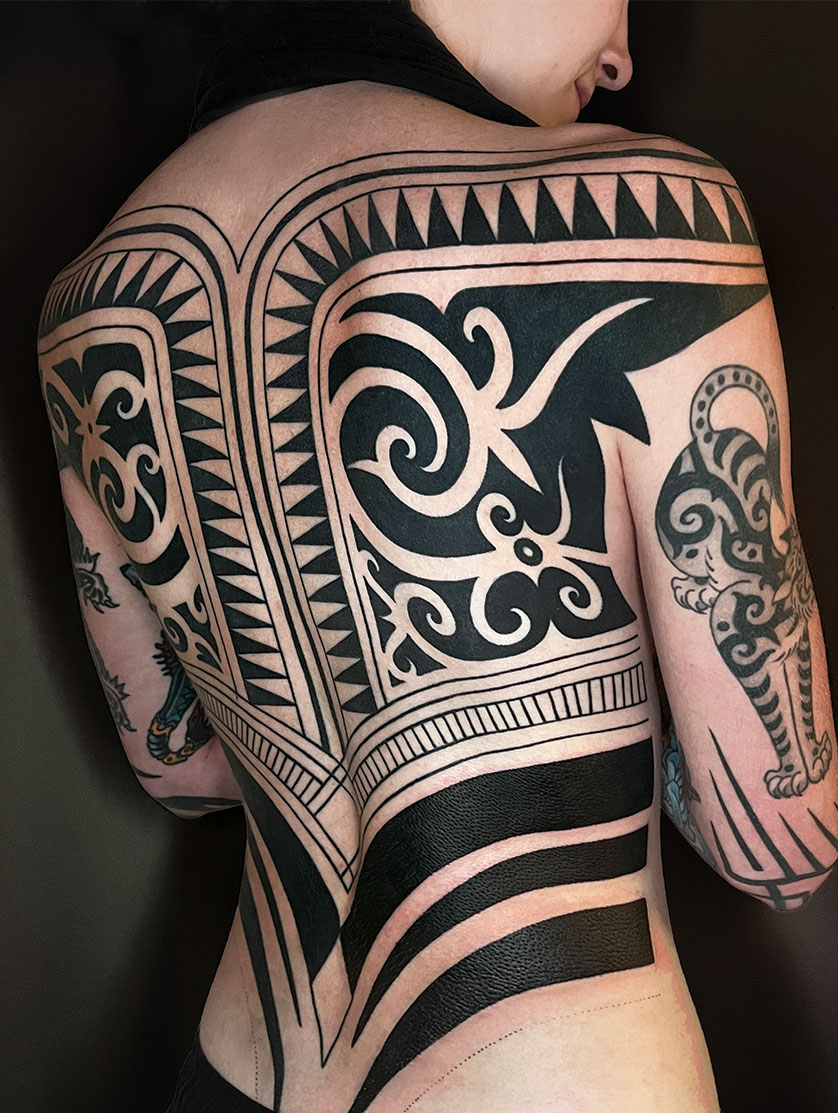
The beauty of tattoos can be found in the same thing that scares people about them: their permanence, the commitment to choose a particular piece of art and be its keeper for the rest of your life. Every design is a one-of-one; even if it is based on some pre-existing image or quote, its transfer is singular to this body, this moment. Even the finest line work quivers in its own idiosyncratic way; every color reacts to the unique permutations of the skin itself into a particular hue that can never be fully replicated. Over enough time, even the ink will begin to seep and spread, elongating and reforming into not so much an addition to the body but a part of it, as elemental to the self as the flesh it wears. For these subjects, the willing canvas who are eager for reinvention, every tattoo is one step down a winding path to some intangible ultimate form; a choosing to carve bespoke rivets and shades into a body we did not choose to inhabit but must, reclaiming some piece of ownership of a life we were thrust into. It’s intimate, borderline spiritual, and inherently revolutionary; inked metamorphosis on the dermal level. It’s also just plain cool. But for the artists themselves, the craftspeople who diligently mark and transform person after person, day after day, the work may be a calling; it is most certainly a job.
COMMUNITY + PASSION
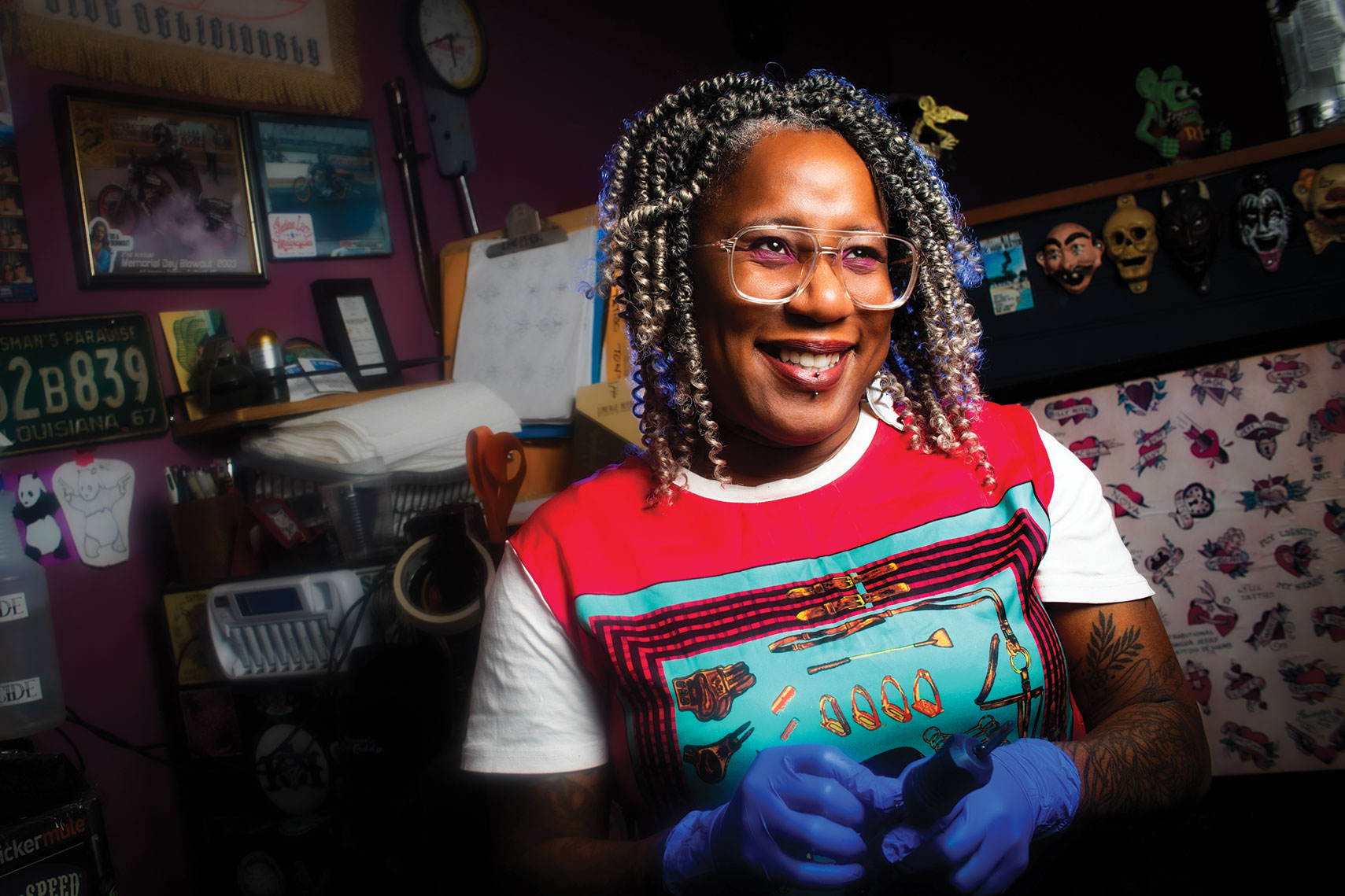
Malaika “Mecca” Burke knows well the value of being embraced by a community of artists, as she has helped foster the Greater New Orleans tattoo and arts scene for over a decade. After several summer volunteer trips that took her from New Jersey to the Lower Ninth Ward in the aftermath of Hurricane Katina, Burke fell in love with the intangibles of New Orleans and decided to stay, with only $80 and a duffel bag to her name.
“I always knew that I was going to be an artist,” Burke said. “I didn’t necessarily know that I was going to be a tattoo artist, but it’s the only job I’ve ever held down for more than six months. So God bless it.”
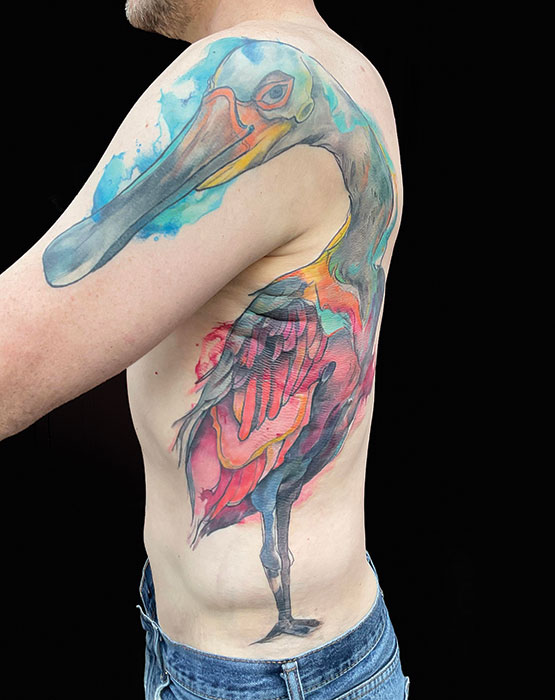
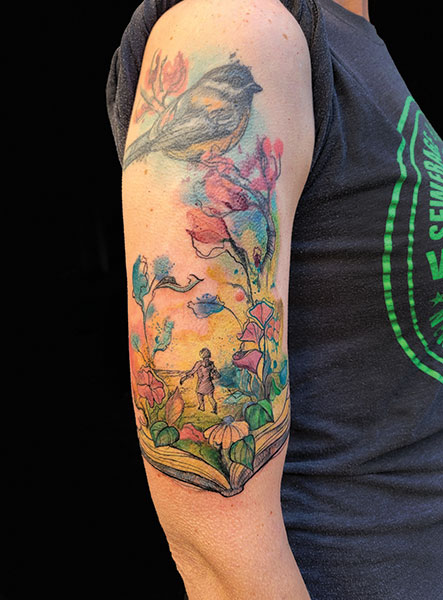
A gifted artist as a child, Burke’s assumptions that she would be a quick study with a tattoo gun were soon dashed, but she persisted all the same. Citing thick skin as a prerequisite to a lasting career in the tattoo trade, Burke still feels as if she should write an apology letter to anyone she tattooed in her first year. Still, through each mistake, and by her own admission, she made every one that she possibly could; she grew not only in her own skill but into her own lush style of watercolor tranquility that looks like paint spilled by a mind of its own.
“I would often joke that I started doing watercolor tattoos because I was bad at everything else,” she joked. “Oh, is your line work kind of shaky? Do it on purpose. Go outside the lines. What does it matter? So in my brain, it was like easier to translate that than other things. I make my tattoos look like my paintings, and my paintings like my tattoo. It’s all just one type of art.”
Burke never intended to become the owner of Hell or High Water Tattoo, not to mention its new location on Frenchmen Street in the same building as the famed Electric Ladyland tattoo parlor, but things just turn out that way in New Orleans sometimes. Now part artist, part proprietor, Burke’s work has found herself a central cog in the New Orleans tattoo scene, creating the NOLA Black Tattoo Expo, a de-facto summer camp for black tattoo artists from across the country that she essentially was forced to create after telling the idea to too many people. As a force for change in an industry that is still predominantly white and male, creating spaces for the sharing of art, experience, and good vibes are as much a reflection of Burke’s lasting influence on her chosen city as the tattoos themselves.
The tattoo artists of New Orleans, much like any art scene worth its reputation, place a symbiotic importance not only on caring for themselves but for their neighbors, visitors, and aspiring creatives. From Lucky Dagger Tattoo’s NOLA Cans 4 Food organization, which collects aluminum cans for cash to purchase food for unhoused people in the city, to Burke’s insistence on habitually leasing gallery space for young unrepresented artists of despite the crippling overhead, the tattooers of New Orleans are as intrinsically linked to the city as ink in flesh; spreading outward as a spirit of collective care for all things good and lasting in art. The beauty of tattooing, it seems, can be most acutely found in the commitment demanded of the artists who are truly one-of-one craftspeople. Their work may pay the bills, but for their subjects these artisans are something far beyond the mundane, offering a path past the drudgery of our standard-issue bodies; pigment poets offering an opportunity to touch something that reaches far deeper than the skin into the very stuff of the soul.
A FINE LINE
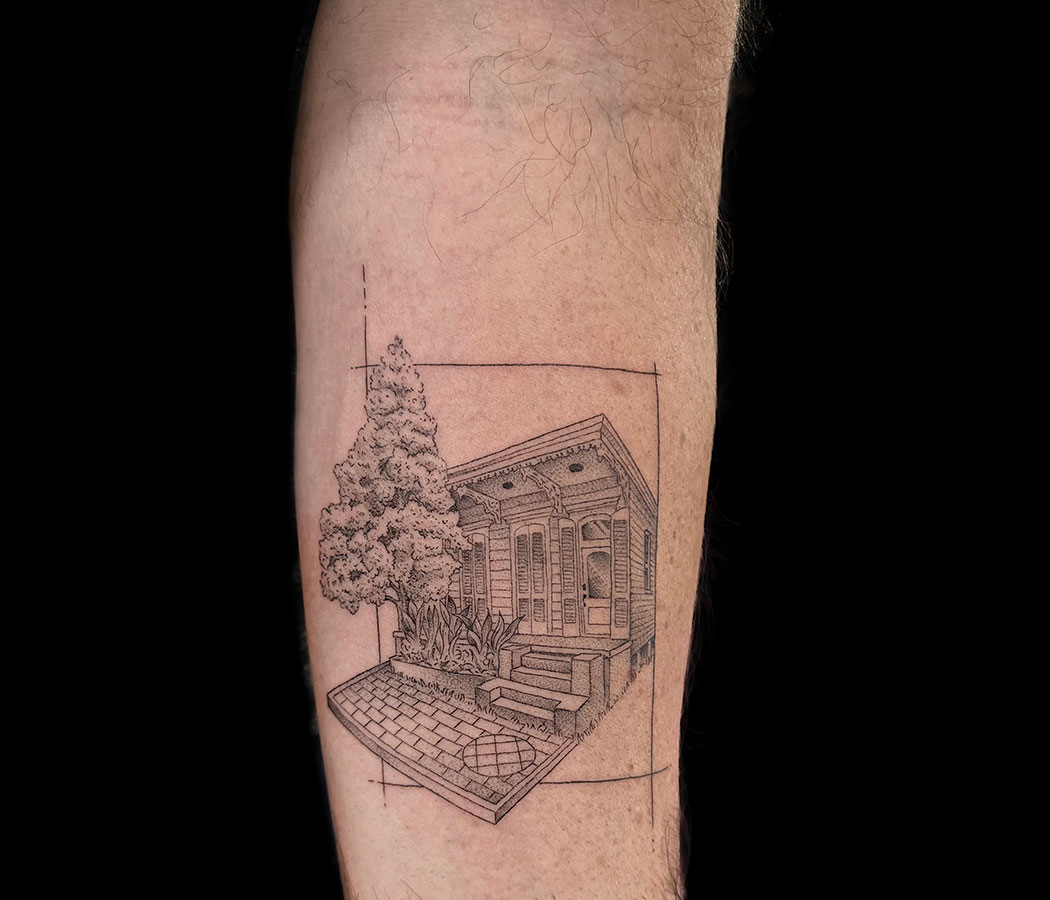
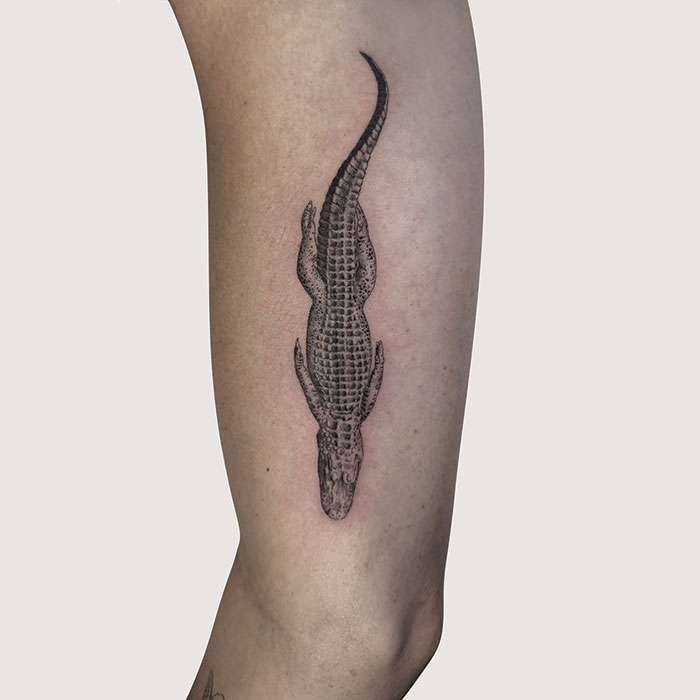
It wasn’t until well into his career that Sean Harrington discovered the style that he would come to be known for. As a fine line artist, Harrington’s work is precise and delicate, providing a black-rimmed, etching-type image where the skin itself provides the background, allowing the artist to build definition with layer after layer that are distinct and clean. Tattooing always felt like the proper medium for Harrington, who broke into the industry at a time when being an “artist” was not a prerequisite to be a tattooer. A Virginia native, he sought out the technical expertise of tattooing in the traditional, if often gatekept, path of apprenticeship; a method that has become somewhat more democratized nearly three decades later via YouTube and social media, providing an accessibility that couldn’t exist in earlier generations. Paying a couple thousand dollars to a guy he knew for insight and guidance, Harrington’s instincts sparked almost immediately as he speed-ran the traditional timeline of progress and was tattooing customers within a month of his first initiation, a prodigiousness he attributes as much to his innate ability as to a misplaced, if effective, confidence.
“It was different back then. There weren’t a lot of people with a really good art background, so it was easier to stand out,” he said. “Many tattoo artists just didn’t draw well. So you could be a decent drawer and stand out. Today, there are so many good tattooers online that it blows me away.”
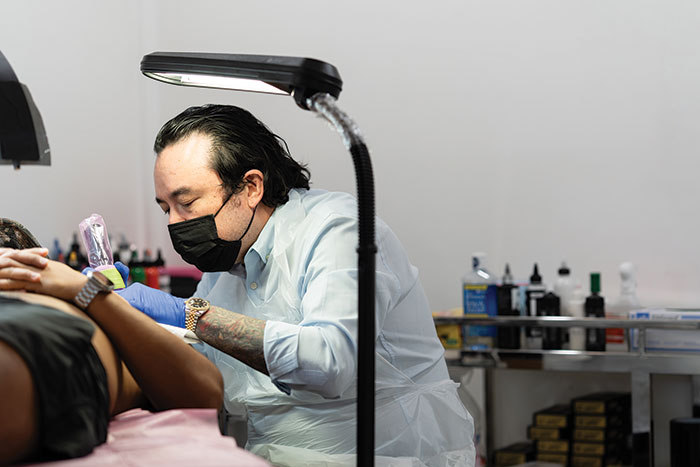
It was only after coming to New Orleans that Harrington, whose first tattoo was a flower on his thigh that he gave himself, found his niche, working in a style other artists seemed uninterested in or downright dismissive of that he sensed an aptitude for. What was once a manner of tattooing relegated to “prison style,” “fine line” tattooing gained prominence around 2020, becoming a look that was more distinct, more feminine, and, ultimately, more accessible to a growing population of curious people who might never have otherwise considered being “a person with a tattoo.”
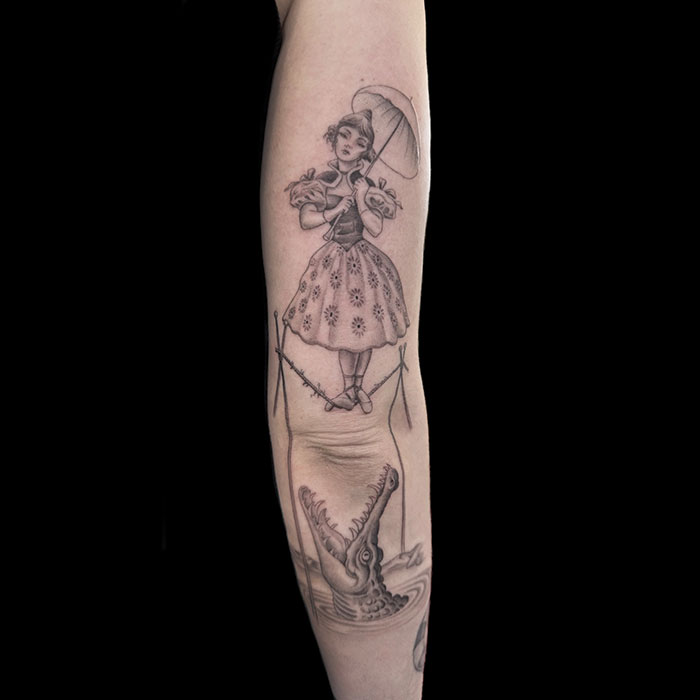
“None of the other tattooers that I worked with wanted to bother with it,” Harrington said. “I loved doing little things and thin lines, so it just took off from there and snowballed. Suddenly I was booked up for like six months doing that type of stuff.”
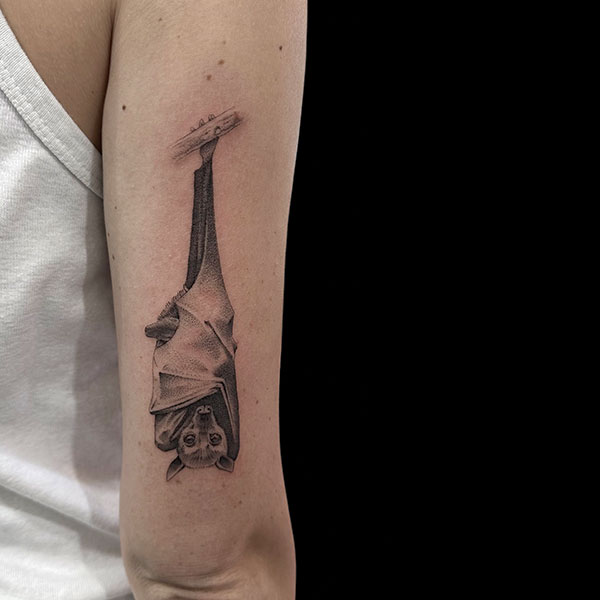
Working from the cozy confines of his own studio on Magazine Street, Sean’s output can be found adorning the bodies of the extravagantly illustrated amongst us, certainly, but also folks who one might never suspect of having tattoos: neurosurgeons, nurses and even pastors. The thinness of the line art is part of the appeal, sometimes with enough subtlety to be almost not noticeable; but so is the simplicity, the cheek of a tiny rebellion whose aesthetic fits any look, style, or life path.
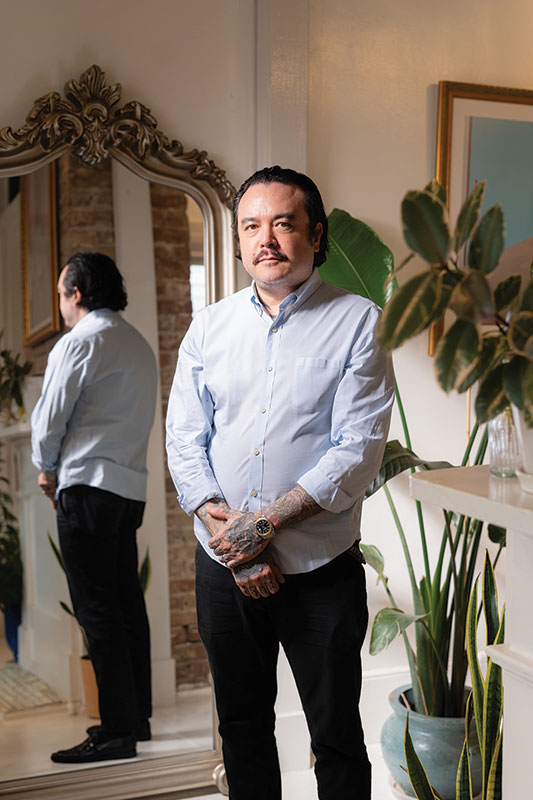
“The types of tattoos I do are a way more relaxed,” Harrington said. “It’s not as much of a commitment, not quite as jarring. That’s really the appeal for some people. It’s so thin and light that it won’t mess up your wedding dress.”
SIGNS + SYMBOLS
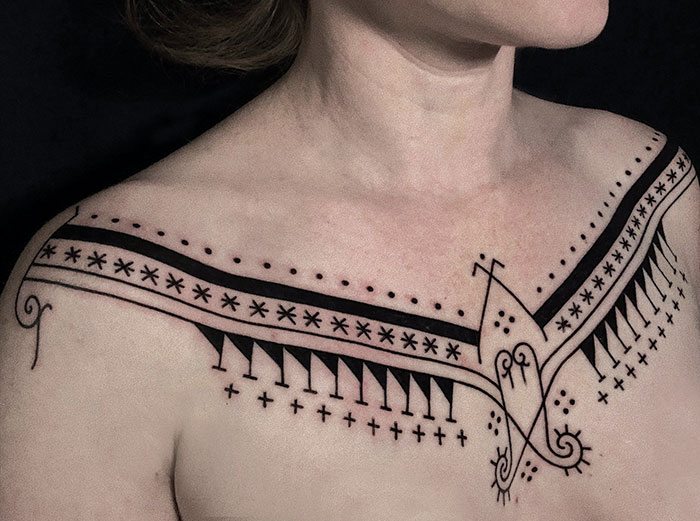
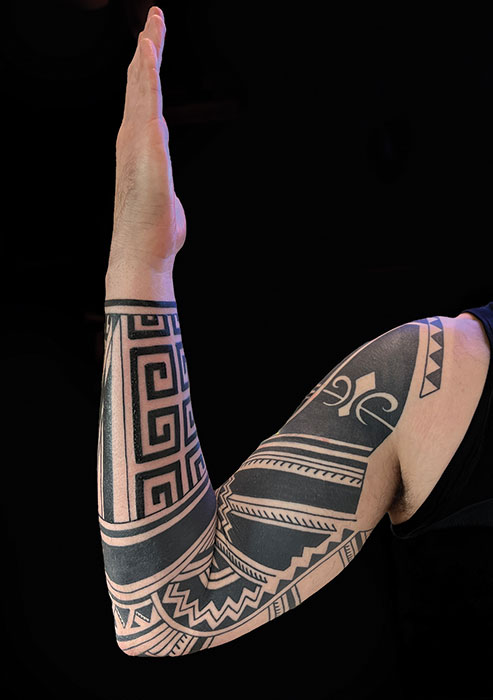
For Sarita Aristizábal, aesthetics are only one piece of the puzzle. For her, tattoos themselves are less an outward expression than a deeply intimate and internal one, a manifestation of the soul through the secret language of history. A Colombian native who trained as a fashion designer before becoming a tattooer, Aristizábal’s tattoos are not translations of established imagery but hyper-personalized representations of an identity made real. Through the use of symbols that feel ornamental and tribal, Aristizábal sidesteps the pitfalls of appropriation in favor of something that seeps into the pores and exudes a fascination with everything that was, is, and will be.
“Being from South America, you learn the traditional styles, but nothing was closely related to my own upbringing,” Aristizábal said. “Growing up, we would hear that our roots were not very well appreciated. I always found that very strange because I really have always loved folklore and symbols. And coming from a design school, part of my references have always gone back to the crafts of ancestral peoples. And so I feel like that has blended into my tattooing view.”
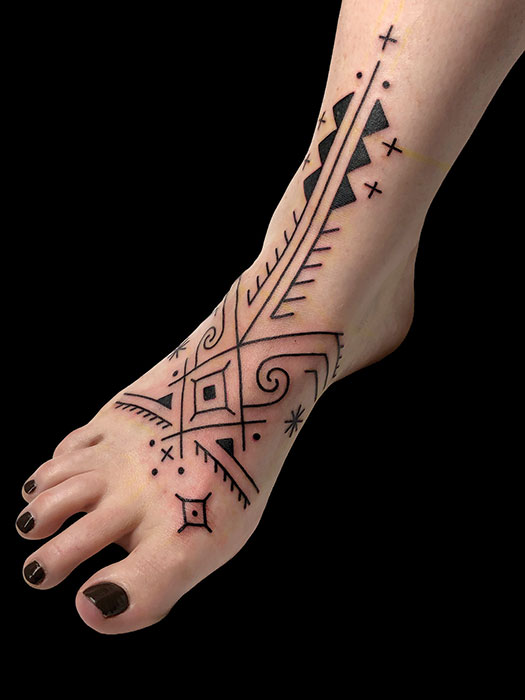
Love ultimately brought Aristizábal to New Orleans after meeting and falling for tattoo artist David Noellert. It was there that she established a style at Good Work Tattoos, owned by David Noellert, that does not exactly conform to the usual practices of impersonal tattooing. Whereas most tattoo artists create a template, a temporary tattoo that goes on the body first as a tracing element, Aristizábal free-draws her designs directly onto the subject’s skin with markers, forming a direct connection between artist and subject. This process precedes a rigorous process of interview, conversation, research, and study between Aristizábal and each subject as they, together, discover what this particular tattoo is meant to represent. Some clients wish to represent their ancestry, prompting Aristizábal to dive into that culture to understand what she can take from what is known and studied. While the reinterpretation of symbols is central to her work, Aristizábal takes special care to stay away from very sacred images from any culture that is not the subject’s own. The goal is the significance of the symbols created and of the process of manifesting them into flesh. Context matters when dealing not only with a living canvas, but a culture as well, when the stakes are meant to last a lifetime.
“I love this idea of symbolism because this has been present with humanity throughout our history,” she said. “It’s like a transformation that they’re going through. Throughout all these years, I’ve seen the power of owning yourself, changing your look, and feeling empowered by that. I was lucky enough that tattooing embraced me and allowed me the chance to make not only something useful and beautiful for someone, but something that mattered.”
TRADITION + ARTISTRY
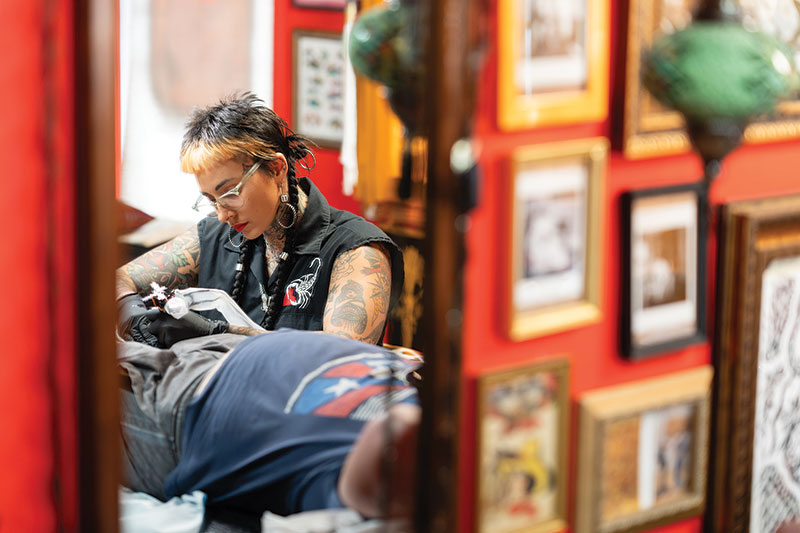
Wearing tattoos as a further accentuation of the body, you wish to present is part and parcel of the work that Jacqui Rose offers clients; parlaying a more “traditional” art style for which subtlety could never be attributed. Born in San Diego, Rose found herself wandering from an early age, making port in San Francisco, where she saw the existing tattoo scene as something worth aspiring to join but gave up for fear of not being “cool enough.” After a short-lived ambition to join the burgeoning tech bubble was remolded into a humanitarian’s desire to see the world, she found herself in Vietnam, teaching English while learning the finer points of tattooing from a mentor figure, though a language barrier was a hurdle to her education. Little did she know that the tattoos that she brought with her to Vietnam, and later Cambodia, would not only be what set her apart from her peers, but also be a testament to her intuitive understanding of what great tattooing looks and feels like.
“I got tattooed at Spider Murphy’s, which is like a really famous shop in the tattoo world, and I didn’t even like realize how well known it was at the time,” Rose said. “When I went to a shop that I worked at in Cambodia, I remember they had, like, Spider Murphy’s flash on the wall, and I said that I had gotten tattooed there. They were like, ‘Whoa! Like, you got that tattoo of Spider Murphy’s?’ I feel like that gave me some street credit.”
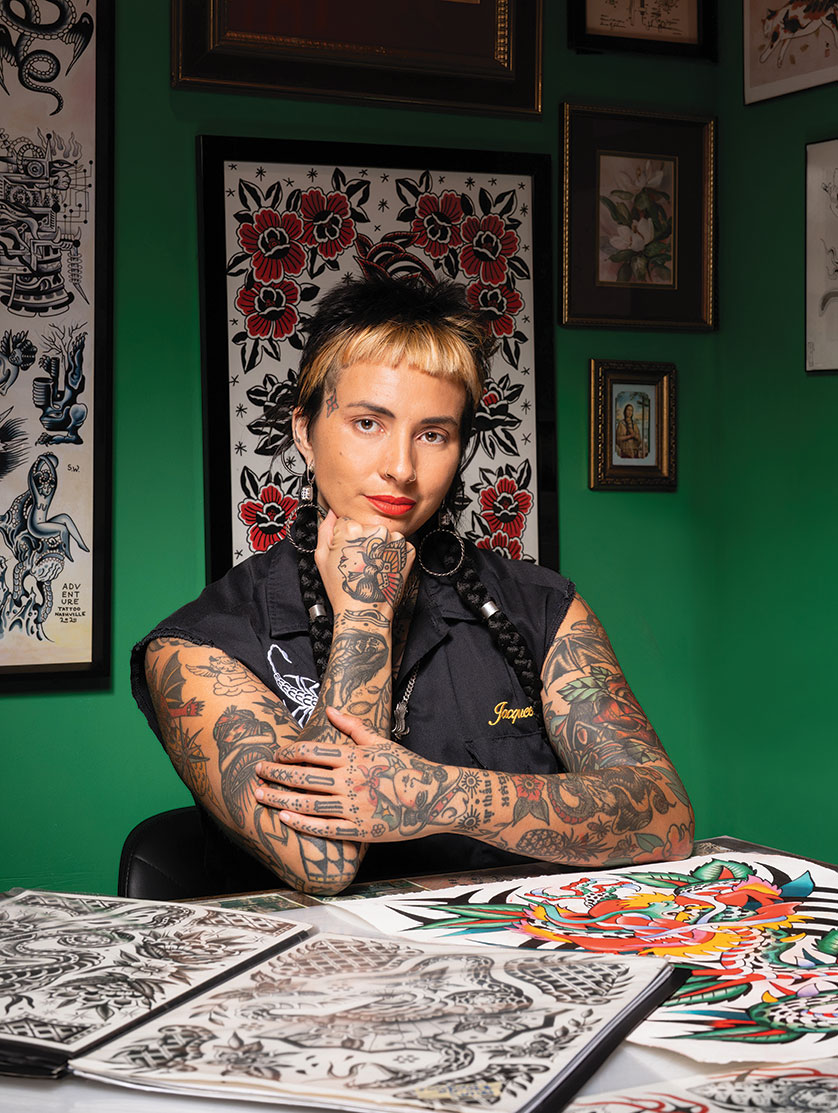
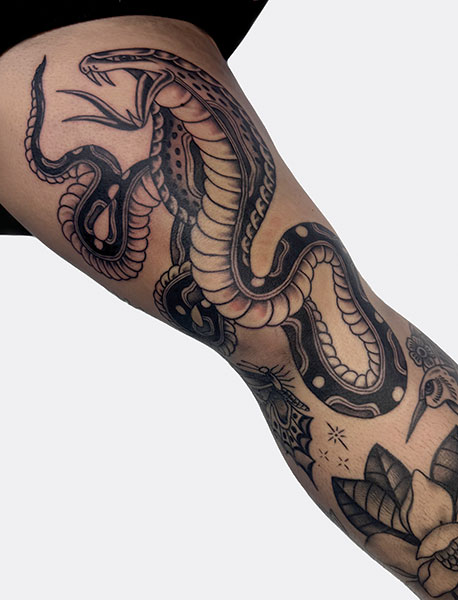
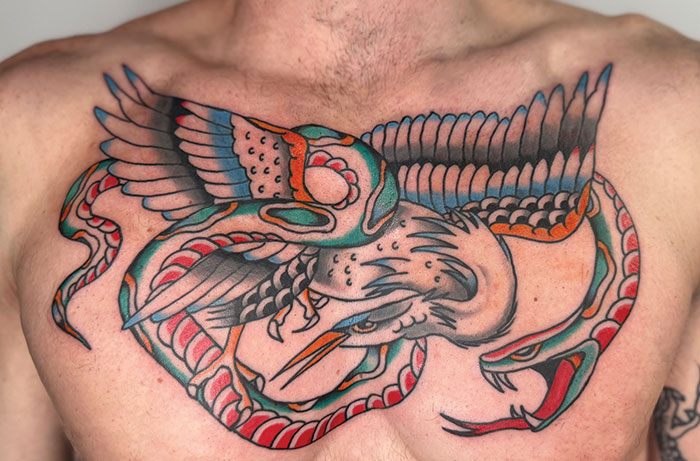
As a subset of the traditionalist school of tattooing, Rose prefers to think of her work as “bold” or “classic,” a style she picked up working in Cambodia, where “American Traditional” was a common specialty. Not one to go through any process in the presupposed order, it was there that Rose began painting flash, ready-made designs that customers can choose from; a discipline that often predates any attempt to actually tattoo a person. But it was here, by translating her preferred style from paper to skin, that she found and synthesized a cross-pollination of styles that felt somehow classic and modern; a best-of-both-worlds approach that she brought with her when settling in New Orleans at Lucky Dagger Tattoo.
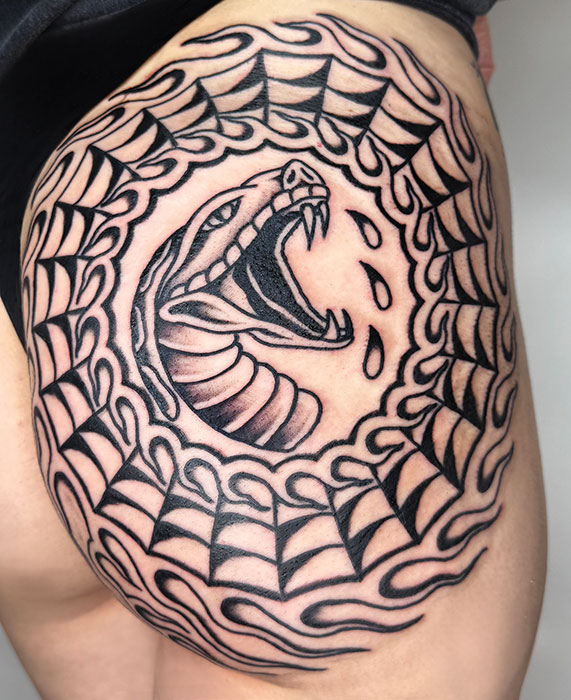
“Sometimes people have this idea that they like want their tattoo to be unique, and so they’re like, ‘Oh, everybody has a spider web. That means it’s cliché,’ And I’m like, ‘Well, if you want to be unique, you should probably just not get a tattoo because everybody has tattoos,’” Rose said.
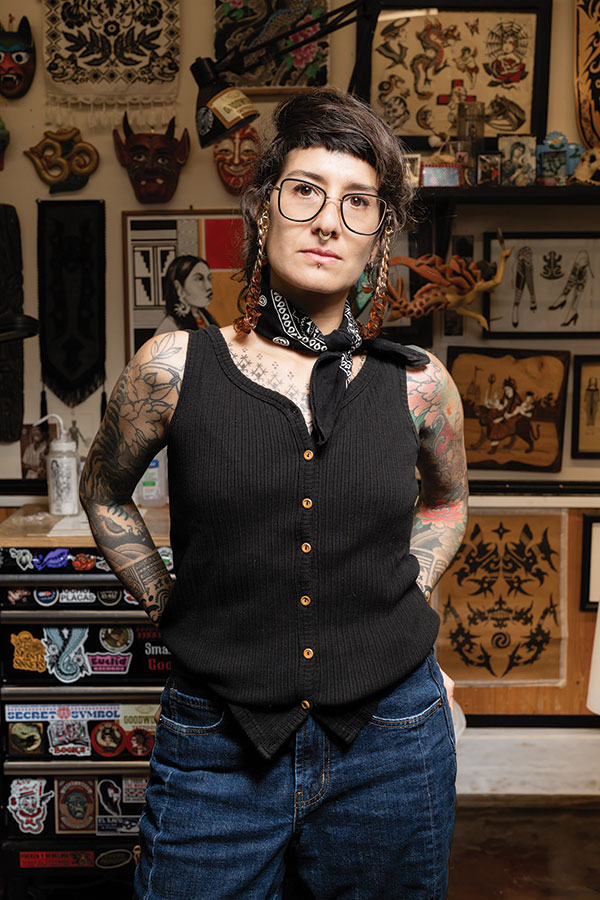
Beyond her devotion to tradition, Rose is more prominently known for innovation, remixing the gendered bias of tattooers long past into something that feels equitable and enriching, allowing a client to feel empowered by their tattoo, more realized and true to themselves. Once, after tattooing a woman’s rear end with a lush spiderweb design, she received several requests to do the same for friends and friends of friends. Soon she realized that there was an opportunity here to do something new, to allow the tattoo itself to be an accentuation agent for femme-bodied people; a compliment to curviness. While not an uncommon practice, many back pieces of this ilk effectively flatten the topography of their bodies or even make it disappear entirely. Rose decided to work with the body, casting circular designs that swirl and loop around the hips and buttocks, creating a fuller and more flattering look. Though, as with all commissioned art, the artist is in many ways merely a conduit for the client’s vision for themselves.
“What I like about this type of tattoo is that I haven’t seen much like it on the internet,” Rose said. “When the first person asked me, she was like, ‘I wanna make sure that my butt looks really good;’ and I thought that was interesting because sometimes I see butt tattoos and they’re always designed by men. Our job is to make sure that they have an idea of what they want their body to look like when they’re wearing these tattoos. It’s really about how you want your body to look.”
