
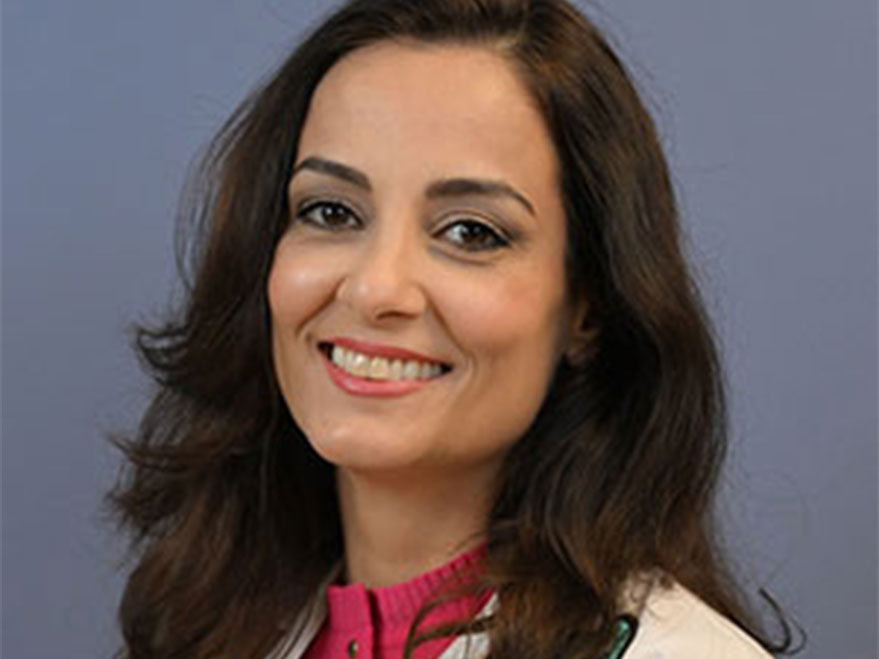
Hemophilia is widely regarded as a disease that only targets men, leaving women who suffer from the disorder largely underserved. Dr. Maissaa Janbain joined the LA Center for Bleeding and Clotting Disorders (LCBCD) in 2012 to help balance that disparity. Now the Director of the Center, Dr. Janbain leads a women’s clinic within the organization dedicated to providing comprehensive care to Louisiana’s girls and young women with bleeding and clotting disorders, offering critical medical, professional, and social support. Through their efforts, new patients have increased by 22%, surgeries and procedures are up by 62%, and attended visits have leapt by 64% in a short amount of time; a testament to what increased accessibility in women’s healthcare can provide.
Born in Beirut, Lebanon, Dr. Janbain graduated from Lebanese University School of Medicine in 2005 before moving to Cleveland, Ohio, to complete her training in Internal Medicine. As Director of LCBCD, Dr. Janbain is a celebrated researcher and speaker, having received several awards and grants, and is active in research focusing on the use of global assays as biomarkers of outcomes in hematologic disorders.
The Louisiana Center for Bleeding and Clotting Disorders is the only federally designated Hemophilia Treatment Center (HTC) for adults and children in Louisiana and the Gulf South, offering assistance from workup to management planning for procedures and recovery. The LCBCD clinical and pharmacy team also works closely with the patient and referring doctor to streamline the process. Serving patients since 1980, the LCBCD has been pushing the cutting edge of innovation not only in treatments and procedures, but more importantly in caring for underserved demographics and populations, neighbors all, that make Louisiana susceptible to bleeding disorders.
“I’m willing to say that most of our patients see our center as an extension of their family,” says Dr. Janbain. “We prioritize outreach, going to where our patients live, even when disaster strikes. During Hurricane Katrina, the center was crucial to helping evacuate patients even though it was a smaller operation then. Our approach is unique because our patient population is as well, and deserves the best care we can provide.”
From the floodwaters of Katrina, the LCBCD has grown considerably, placing itself at the nexus point of research. Treating hemophilic bleeding after it has already occurred had been the norm for decades, leading to imperfect healing, scarring, joint disease, and a debilitating range of motion issues. These factors significantly limited the normal activities that those suffering from the condition could partake in. Over the years, various new procedures were developed, tested, and expanded upon, including regular intravenous infusions of clotting factors to prevent serious bleeding. But the high treatment burden impacted their quality of life. Today, however, a revolution is underway: gene therapy and less invasive methods of treatment are allowing patients to be more active and even compete in sports. LCBCD was even the first clinic of its kind in Louisiana to infuse two patients with gene therapy; a seismic achievement in the development of effective methods of counteracting hemophilia.
“It is remarkable the amount of change that has happened in the last two years”, says Dr. Janbain. “By opening a clinic that helps us fully serve the people of Louisiana, and specifically identify women with bleeding disorders, we are providing even more comprehensive care and support to our patients.”
